

20 Sep EQUALITY AND ADAPTED SPORTS
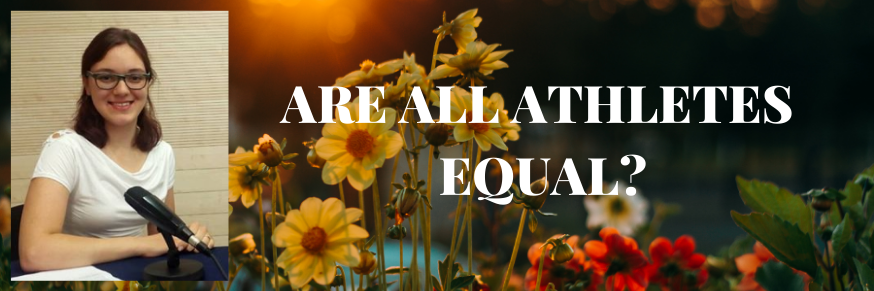
A VISION OF SPORTS AND DISABILITIES FROM WITHIN … ✴️ Nina Portolan is a person with a very well furnished head. He has higher education, does karate and participates in the wheelchair para-karate category (he cannot do it otherwise due to the WFK regulations) and above all, he gives a constructive opinion on the good and also the bad of adapted sport. Many, due to false protection, think that the person with functional diversity does not have that capacity to criticize, to fight for their rights, to express an opinion, to get angry and to try to build something better because participating in a competition is worth it … This is a very clear example of sports and social struggle.
The parakarateka is a mentally strong person (do not make them weak with your false or excessive protection, please) who is going to compete, to win if he can (they also want to win although participating makes them happy), to try to make their classification be fair, that he can compete fairly within his disability, that there are categories for everyone, that the referees, the technical staff and the entire cast of people who will value his work are trained. If they strive to be there, their thing is that the rest also strive to value them correctly.
In Nina’s case, she is lucky enough to belong to a club where Sensei Livius Bunda, in addition to being Master, is “family”. Parakarate Klub Evropa in Belgrade, Serbia, is an example of real inclusion. Hard work, sport for everyone, karate for everyone, family … As they define themselves: “we are here to show that all people, regardless of how they were born, have equal opportunities in everything in life and in sport. Here, here! “…
ARE ALL ATHLETES THE SAME?
A month ago, I wrote the ENIL communication for the Office of the High Commissioner for Human Rights, on the implementation of article 30 of the United Nations Convention on the Rights of Persons with Disabilities (CRPD), on access to sport and leisure. My heart was dedicated to this task, because I am an athlete. It also broke a bit with each new email I received while collecting data from various countries in Europe and recalling my own experiences.
PHYSICAL ACTIVITY AND DISABILITY: IMPORTANT?
While there are exceptions to the rule, physical activity is not considered an important part of life for disabled people. Obstacles arise at all levels: from playgrounds and public places to schools, gyms, stadiums and training centers of national and even Olympic level. So how are we expected to stay active, or even achieve greatness, when the very beginning of a disabled child’s exposure to physical activity will be in a therapy setting or full of setbacks, too big for the child’s dreams. child? It seems that disabled athletes are still seen as a novelty and are not held to the same standards as non-disabled athletes.
OBSTACLES: FINANCING, ADEQUATE SERVICES AND AWARENESS.
There are some accessible playgrounds in Serbia, several short and adapted nature trails in Hungary, and even adapted beaches in Spain, but most remain out of reach. The current laws on access to physical, recreational and leisure activity are mostly not implemented. The biggest obstacles in all countries are the lack of funding, infrastructure, adequate services, as well as the lack of public awareness on this issue.
WE ARE TREATED LIKE FRAGILE BECAUSE WE ARE DIFFERENT
When we travel, my karate team and I are always praised, however many times we have been treated as fragile and we have been alienated from our activities due to our differences. Each time this does not happen it is a small victory, but even so, the general impression is that the implementation of the legislation aimed at liberating us is just a mirage.
During my school years I was exempt from Physical Education classes and I thought it was normal. It wasn’t until my final two years in high school that I wondered why I wasn’t allowed to at least try some of the activities that my classmates did.
LACK OF TRAINING, FINANCING AND ACCESSIBILITY
With my experience and the information I have obtained, in most countries there is some form of guarantee for children and young adults to enroll in general education and physical education classes on an equal basis, but nevertheless, there is a significant discrepancy between current policies and their implementation. Once again, everything comes back to consciousness … The lack of inclusion is mainly due to the lack of teacher training, the inaccessibility of the facilities, as well as the lack of funding. College classes on sports for the disabled most often follow the medical model of disability, without prioritizing the person.
PARALYMPIC COMMITTEES
Paralympic committees do a hard job promoting the sport nationally and internationally. This is the best form of exposure to sport for disabled youth. Non-Olympic sports are in a worse position, Karate for example, but they constantly struggle to draw attention to things that are rarely visible outside of our little community bubble of disabled people.
SPECIALIZED DEPARTMENTS FOR PEOPLE WITH DISABILITIES
The departments in charge of promoting competitive sports for disabled people are integrated together with other general departments, mostly in Slovenia, Malta and Spain, for example, while in Serbia and Hungary they depend on the sport in question. With this in mind, there is another barrier for anyone with a disability who wants to become a competitive athlete because finding a sport that includes them, suits them and excites them, with a strong team of people around them to help them.
Therefore, I consider myself very fortunate because the adapted martial arts departments are fully integrated within the main federations in all cases, however there is a lack of adequate adaptation of the competitive categories that exclude many types of disabilities from the main federations, national or international competitions. Until 2019, people with cerebral palsy were not on the list of eligible conditions for the “Wheelchair Users” category. Needless to say, this is the only category for people with physical disabilities excluding the others.
LACK OF CATEGORIES AND NORMATIVE GAPS
Whether the competition follows the same structure as non-disabled athletes also depends on the sport. There are gaps in the rule books, in knowledge, interest, media coverage and, once again, in funding. This translates, for example, into fewer contests for people with disabilities, compared to the general population.
The initiative to have competitions for the disabled at the same time as conventional competitions depends on the department, or even more likely, on the willingness of the clubs and coaches to organize such events. When it comes to martial arts, the general trend is to hold competitions simultaneously, but this is due to the strong initiative of the coaches themselves. Conventional high-level competitions remain inaccessible to disabled athletes.
IT IS RARELY THOUGHT THAT THE DISABLED ATHLETE HAS OTHER QUALITIES
Another important point is that disabled people are rarely considered outside of their roles as competitors, I know many who have the qualities of great judges / umpires or coaches, for example. In the near future, I hope to become a licensed karate coach. As far as I know, I would be the first to do it in my country. This is possible in Spain or Malta, as long as the corresponding exams are passed, but in Serbia and Hungary it requires a bit of ingenuity, and perhaps even madness.
EMPTY SEATS WHEN PARTICIPATING FOR-KARATE
After all that I have said, one may wonder, what motivates us then? Often times, children and disabled adults face empty halls and empty stands alongside athletes during promotional events. There are not enough funds, nor media coverage, to involve a large number of disabled and non-disabled people in this issue, this need for change is important. I still remember the empty stands during the European Para-Karate Championships in 2018 that I was able to participate in. The only people in the room were the judges, some of the other competitors, coaches, and our families. The only applause I heard, albeit very loud, so much so that the ground shook, came from them.
LOOK AT THE PERSON WITHOUT TAGS, NOT THE DISABILITY
Regardless, I would never change my decision to become a Para-Karate competitor. I have the best equipment and coaches you can imagine and all the people who work on the field in disability sports are some of the best I have ever met. Come to the person, not the disability. They will find your strengths, not your weaknesses, and show you who you are without the label.
Written by Nina Portolan, European Solidarity Corps volunteer at ENIL and Parakarate player of Serbia.
Original publication in the ENIL Newsletter: https://enil.eu/news/are-all-athletes-equal/?fbclid=IwAR0ceA1Um2EMCE8Xq1x1x-Y7LtjgkiU6YGWqfhKQ7p9Y1d6-CGN6RiqEW9Q
This page is also available in: 

No Comments