


07 Sep MAIDER (35 YEARS OLD)
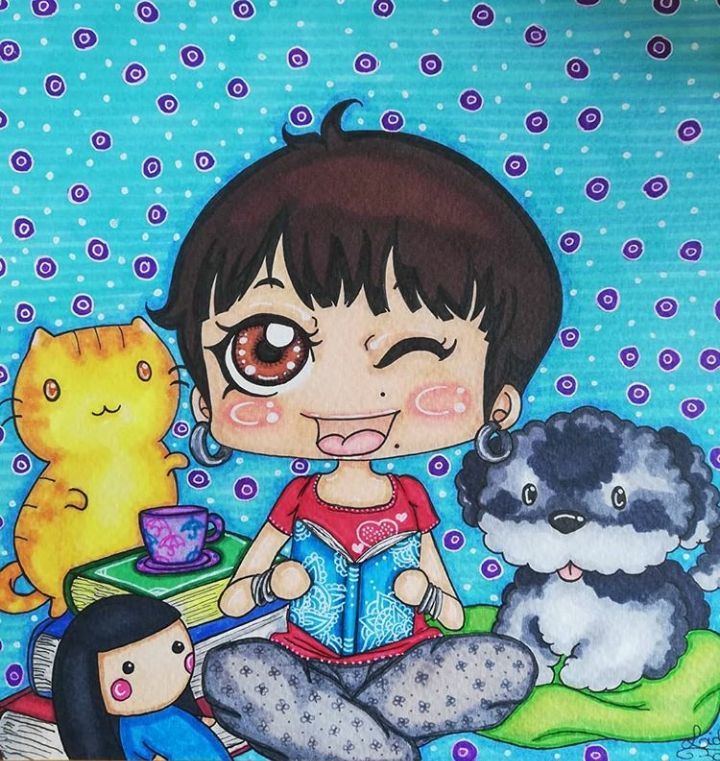
DEAFNESS ALSO EXISTS AS A DISABILITY ✳️ Psychopedagogae in process and “fanatic” of the #parakarate from the moment she met him. Their story is very interesting to understand that SORDERA and SIGN LANGUAGE do not have to be closely linked. Hardcore reader, cartoonist and illustrator of fantastic animals… That’s Maider and she tells her story herself.
INVISIBLE DISABILITY
Sometimes I complain that deafness is one of the most invisible disabilities out there. I know that almost all of us believe that our problems are not visible enough to raise awareness of society, but I don’t lie when I say that people aren’t too concerned about what it’s like not to hear.
And it is not that there is no concern for free selfishness or selflessness, but because in my opinion (based on experience), society establishes a correlation: deafness – sign language – communicative impossibility. Based on this, the deaf-listening communication is left in the hands of a Sign Language interpreter and they forget about us. Not only that, but a blunder is made: to believe that all the deaf are equal and therefore we have the same needs and the same problems.
ORAL DEAF
No one thinks there are deaf orators. When I define myself as such, it is incredible the number of people, apparently sensitized to disability (special employment center workers, without going further), which tells me “Oralist? What’s that?” That is that the oralists are deaf who speak like anyone, that we do not mean (because we do not know, because we do not want, because we do not want, because we do not need it, namely…). We are deaf who, each because of their circumstances, have learned to speak and modulate the voice within our possibilities to handle ourselves in a normative way.
DEAF PEOPLE WHO DON’T KNOW SIGN LANGUAGE
And that doesn’t make us any less deaf. Not exclusively using Sign Language doesn’t mean that our disability is less, that we don’t need help, or that we have to put up with every two for three of the comment on “But are you deaf? If you speak very well!” Why don’t we go do it? Are we obliged to use a particular language to be considered deaf and therefore visible in the eyes of others? It’s strange and hard to believe that many (increasingly) we decided to get out of the ordinary and not only that, but we got it.
NEW LOOK
We need a new look at us, to understand that deafness is now treated much better than it was 30 years ago and with much better result. This leads to a conclusion: we are fortunately better prepared to face the normative world and with better technology and pedagogy. If all these advances are considered in other disabilities, let it be no less in deafness.
COCHLEAR IMPLANT
I was a listener until I was 6. Meningitis took more than 90% of my ear and I lived with hearing aids and orally in an absolutely hearing environment. At 33 I lost all the auditory remains and stayed at zero until I had surgery, ten months later The cochlear implant that starts to do its function at 34 is an amazing technology that allows me not only to follow my life as a deaf oralist, but to boost much more the sound I knew but not far so clearly. I would never have imagined that the implant would give me so much life, but I also did not imagine that the silence of those ten months and the subsequent recovery would show me the tougher face of a society that is not aware of the wide range of deafness existing.
LOSING FEAR
We would have to live the disability as we live the personal relationships that involve love: giving the best of ourselves in order to make the other life easier, softer, more beautiful. We must lose the fear of communicating with those of us who have a physical/psychic/sensory condition that makes everyday life difficult for us and is unknown to us, because often the problem is not us because of disability, but those who do not know it and do not know how to fit it.
I’ve always said there are as many types of deaf deafness as there are deaf people who suffer from it. We each have our need, our way of life and our system of being in the world. None is less valid than another, absolutely none. Surviving in this barrier-filled world is an art, and art is never a mistake or wrongly done.
SEEING LIFE WITH CHILDREN’S EYES
It’s just about letting us be and being open to know each other and their circumstance. See life with the eyes of children, who see no rarity in their fellows.
Be and accompany, untagged and prejudged. And from there, live together.
The picture you’ll see of me was taken the day I finally had my implant activated, more than a month after the operation. At that time I hadn’t been out of the OTORrine at the time and was in a mall. I couldn’t tell one sound from another and it was extremely stressful.
– ALL SAME ALL DIFFERENT –
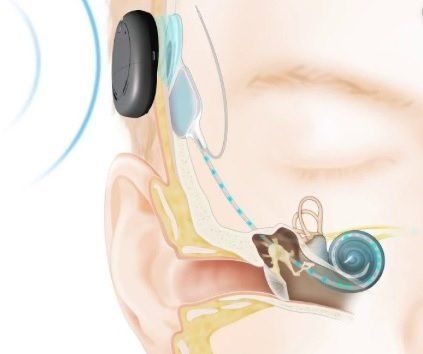
As a curiosity, in the other photo you can see what a cochlear implant is, which I have found illustrated with the model called Kanso. The image illustrates what you see on the outside (the processor) and what goes inside the ear, my little great miracle***
It is barely noticeable because it merges a lot with the color of the hair, but it is the Kanso model of the Cochlear house. I had serious doubts when I chose it, because I had this and the famous back-at-ear that most people know. I finally chose this one and I’m so happy.
This page is also available in: 

No Comments